
Utrecht University

Consultant
the Netherlands
Various
Research & Education
Utrecht University is one of the Netherlands’ largest and oldest universities. Its buildings are spread across the city of Utrecht, with most teaching taking place at Utrecht Science Park: a vast campus just outside the inner city, filled with large modern buildings and a constant buzz of students traversing the campus on foot or by bicycle.
It’s in this dynamic setting that we meet Marlies Sigmond from the university’s Campus & Facilities department. Marlies is a consultant specialising in architecture, accessibility and sustainability. She is involved in many of the university’s construction projects — and she is also a dedicated BriefBuilder user.
The sun is shining, so we sit down at one of the picnic tables in front of the main university building, cappuccino in hand, and discuss the university’s use of BriefBuilder.
How did Utrecht University come to use BriefBuilder?
When I started here, about five years ago, the university was already using BriefBuilder. So, I wasn’t part of the original decision-making process, but I do know it came from an ambition to take a more programmatic, standardised approach to our projects. The goal was to stop reinventing the wheel every time and streamline both our processes and our requirements. BriefBuilder clearly plays a crucial role in the latter.
The goal is to stop reinventing the wheel every time and streamline both our processes and our requirements
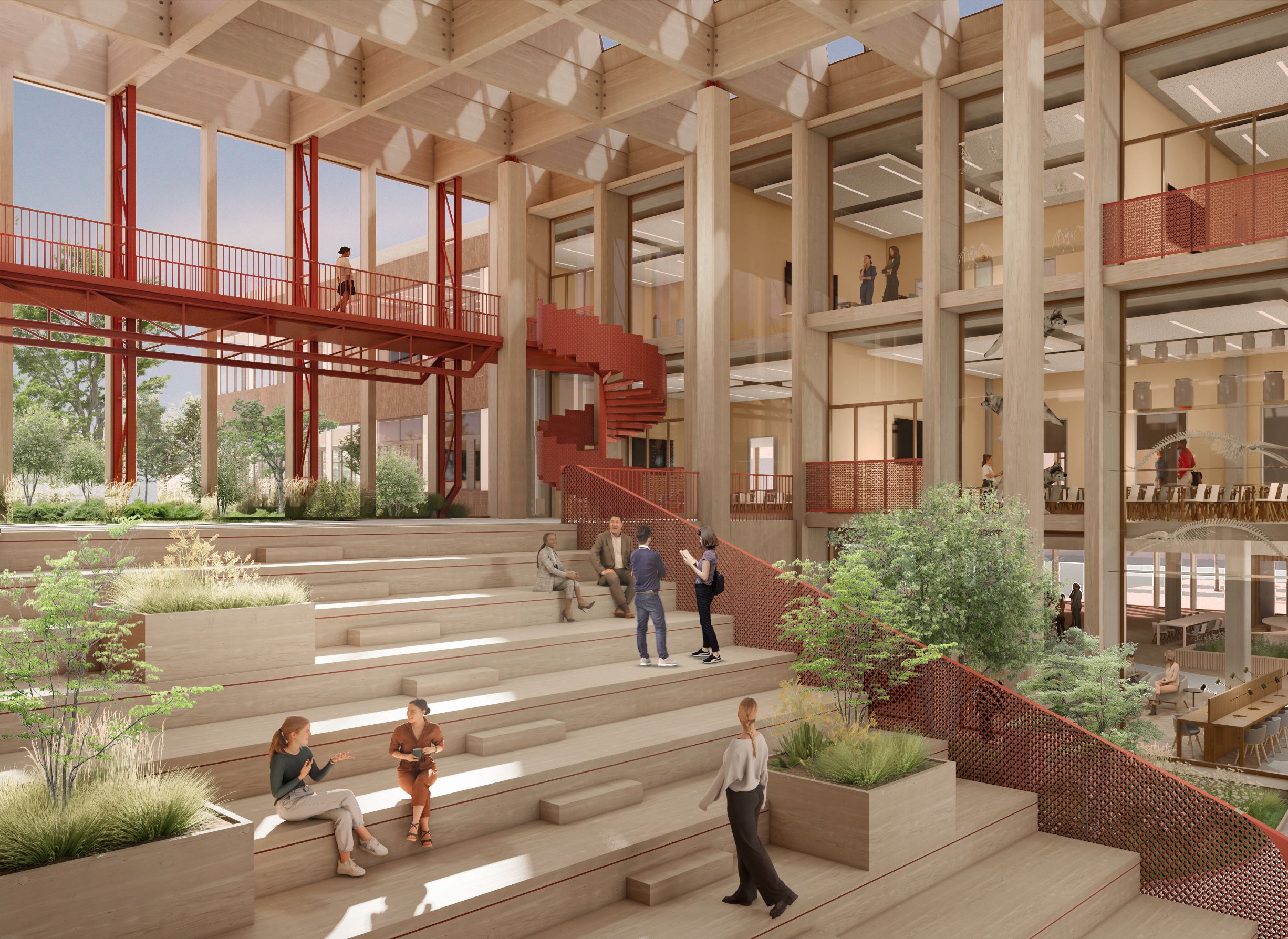
One of the key projects where BriefBuilder is currently being used is the new building for the Faculty of Veterinary Medicine. The 28,000 m² building will accommodate both teaching and research spaces. The architects, Vakwerk Architecten and DP6, envision an atrium building organised around a central staircase, where many of the activities taking place in the building will be visible from the heart of the building. (Image: artist impression of the concept design, by Vakwerk Architecten / DP6. Courtesy of Utrecht University).
Can you elaborate on that? You have developed a standardized set of requirements for your projects, right?
Yes. We have what we call a “library model”, which contains standard requirements for common room types — such as offices, teaching spaces, support spaces, and several types of laboratory space.
Our development team uses this model as the basis for major new-build projects and large renovations. Our maintenance team also use it for smaller projects — for example, to check standard requirements for floor finishes when replacing or renewing them.
It is important to note, however, that we don’t use the model in a rigid way. Especially in renovation projects, you often need to adjust requirements to match the constraints of the existing building. That’s particularly true for the historic buildings that we’re currently renovating in the city centre. These buildings have all kinds of peculiar characteristics that require lots of finetuning in our requirements.
And then there are also projects that come with lots of unique needs. Right now, we’re building a new faculty building for Veterinary Medicine. It includes many standard spaces, but also specialist areas like anatomy and pathology. Those ‘specials’ come with very specific requirements — think temperature, lighting, and hygiene—that we add to the requirements model for that specific project.
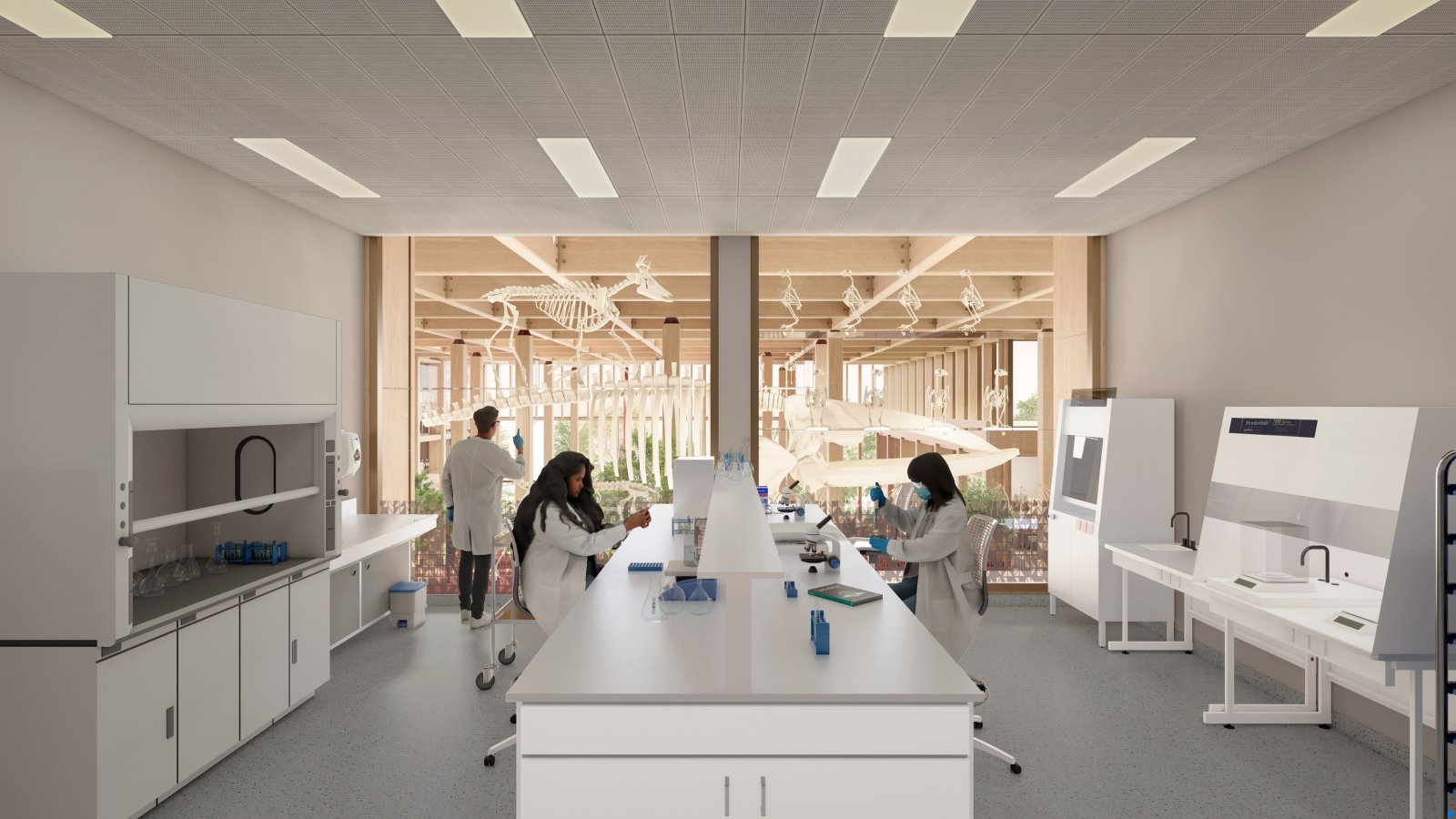
Many of the requirements for the new building of the Faculty of Veterinary Medicine concern the laboratory spaces in the building. These functions come with specific, detailed and critical requirements, for example regarding temperature control, ventilation, lighting levels and hygiene. Capturing these requirements clearly and verifying them during the design process is essential for a building of this type. (Image: artist impression of the concept design, by Vakwerk Architecten / DP6. Courtesy of Utrecht University).
You work with many different architects, engineers and consultants. How do they respond to BriefBuilder?
We give our design teams direct access to the requirements model. And then you always have people who love it immediately — and people who are a bit more hesitant.
For us, this is simply how we work, so we also expect our project teams to work in BriefBuilder. This is also something that we help them with. When people are completely new to it, we explain how the model is structured, where to find information, and what we expect from them. I think this guidance is a crucial reason why BriefBuilder works well at Utrecht University.
What’s also interesting — and sometimes a bit challenging for design teams — is that BriefBuilder has helped us become a much more proactive and articulate construction client. We use our requirements models to communicate precisely what we want, and we then we also closely track whether we’re getting what we asked for.
BriefBuilder has helped us become a much more proactive and articulate construction client
What’s your favourite feature in BriefBuilder?
In line with what I just mentioned, the verification dashboard is one of my favourites. When I’m working on a major project, the dashboard quickly tells me the status and outcomes of verification. Per phase, I can see which requirements have been met, which raise concerns, and which haven’t been checked yet. That’s a great input for our meetings with the design team.
Do you have recommendations for organisations considering BriefBuilder?
Take a step-by-step approach. BriefBuilder has many features, but you don’t have to use everything on day one. Start with what matters most: defining clear, good requirements. That’s the core.
From there, you can build things up over time — verification, standardisation, involving more people, and expanding the range of projects you cover.
And in parallel: invest in implementation. Do an internal roadshow, explain the benefits, provide training, and make sure management actively supports the use of the application. That support really made the difference here at Utrecht University.
BriefBuilder has many features, but you don’t have to use everything on day one. Start with what matters most: defining clear, good requirements. That’s the core
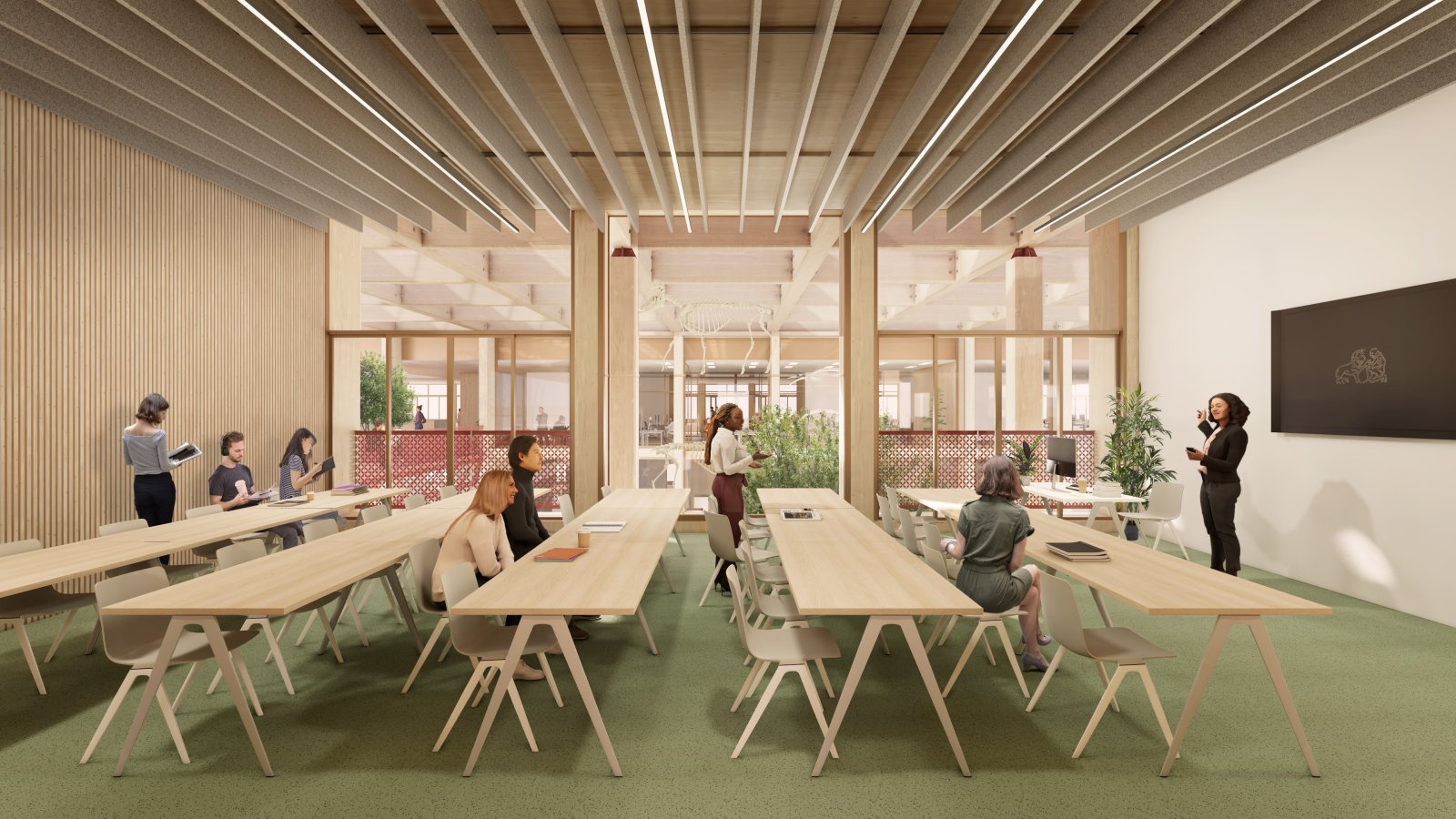
The new building for the Faculty of Veterinary Medicine will offer a wide range of teaching spaces, varying in size and supporting different ways of teaching. Particular attention has been given to requirements concerning acoustic performance, with the aim of ensuring that the spaces are comfortable and effective environments for both teaching and collaborative learning. (Image: artist impression of the concept design, by Vakwerk Architecten / DP6. Courtesy of Utrecht University).
Many thanks to Marlies for sharing her valuable insights!
More information about campus development and on-going projects at Utrecht University can be found hier.